






The Couples Tool Kit

Working together as a team of three — by Jill Edelman, M.S.W., L.C.S.W., Specialist in Couples Therapy

The Coupledom Ambles Towards Seniorhood

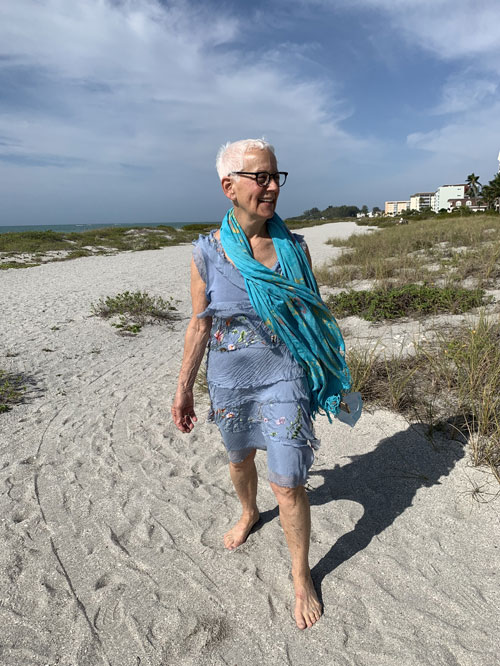
A Road Trip To The Future: My Coupledom has recently aged out of its “middle years” and into early Seniorhood. And we are hardly alone as we join the ranks of baby boomers who over the next two decades will be marching forth to take their seat at the table of ultimate maturity. The announcement of this phase of life passage seemed printed all over the interstate on billboards, in tourist gift shops, rest stops and scenic overlooks, as my husband and I navigated a 3000-mile road trip this Spring, stopping to visit famous garden estates and small cities where many of our fellow tourists were also our fellow seniors. Who else has the time midweek to frolic amongst the azaleas and rhododendrons of the former estates of the historic wealthy or the quaint cobblestone streets of southern cities replete in Civil War markers and Spanish moss?

A Readjustment: Everywhere I looked I saw mirrors, mirrors of my now and future Coupledom, mirrors of myself, my spouse, in the faces and shapes of seniors who shared our journey. And these images of me, us, my peers, brought reality to a psychological proximity far closer than comfortable. Time to readjust to a new reality and recalibrate The Coupledom.

What Club Are We Joining Now? Throughout the life cycle we are given club membership labels, some handed out when we are too young even to notice. Does a toddler know he is a toddler or does a preschooler find comfort in that membership club? Not likely. But certainly when we hit adolescence, everyone lets us know our membership status. And so it goes until that final club, Seniorhood. And within Seniorhood, are there further delineations: early, middle, late and then, divine membership in whatever afterlife vision matches your belief system? All of these labels and passages influence how we view ourselves and our place in society but perhaps none as challenging, I believe, as is this last one, which marks a phase of life so profound in its meaning that thinkers from the beginning of human consciousness have struggled to come to peace with it.

Senior Coupledom and Our Western Culture Clash: My baby boomer buddies and their recent predecessors (folks who are over 66 years of age today) are challenging notions of aging by choosing active lifestyles that depict seniors running marathons, learning new languages and basically thumbing their noses at Norman Rockwell images of old, genteel white-haired elders seated in rockers on a sunset lit porch, passing time. The new image of the toned, energetic, cosmetically altered and stimulated elder who, with the help of Viagra, can keep on perking, presents a useful standard of health and relevance that brings many benefits to today’s senior population. All good? Yes, of course, except for one powerful message in the mix; that the appearance of “old” is not cool. Was it ever cool to be “old” in Western Culture? I don’t know, but what was perhaps cool enough was to be respected for one’s agedness and feel some self-respect as well. I am not sure if today’s seniors feel the pride once felt by their ancestors when what they see in their mirrors is culturally viewed as something to be avoided at all cost(s), pun intended. So the good news is that we can live longer and benefit from medical achievements that prolong an active lifestyle. The bad news is that it is not cool to actually show our age. What is the greatest compliment for adults of almost any age? Wow, you don’t look 45, 55, 65, or 85.

Loss and New Found Gains: So where does that leave the aging Coupledom? Struggling to find dignity and self-respect individually and together as a couple in a journey that offers as many opportunities as it does limitations and losses. The awesome and courageous couple is that team that takes in the reality of what is lost through the aging process (youth status so revered in our western culture; youthful appearance and abilities; unlimited pathways to success and love) and replaces these glories and dreams of glory with new ones.

Aging Together, A Complex Package: What I have noticed in my personal and professional exposure to Senior Coupledom is how the variables that guided past choices shift when a couple reaches a certain “maturity.” Decisions and options are no longer dependent on the quality of school systems, job locations, and optimal access to elderly parents. The restrictions, parameters or considerations that guided prior decision-making now fade to some degree as a couple ages out of the child-bearing years, the sandwich generation, the empty nest. Ironically, this liberation from the concerns of former years can place an intensified scrutiny on the workings of the couple’s relationship. Whims, dreams, health concerns, bucket lists, stylistic inclinations, that one or both members kept in abeyance while achieving other goals, now emerge as needs, wants, my time, my turn. But are these longings mutual? Ah, there is the rub.

My Turn Or Yours? What surprised me most in my small sample of retirees, semi-retired and working elders, was the inherent, almost organic balance established in meeting the needs and wants of each member of their Coupledom. Perhaps it is the truest sign of maturity; couples who, despite different inclinations regarding significant decisions, found the ability to compromise and find suitable and satisfactory packages for living together that meant some yield on both sides, sufficient gratification for both. Location is a big one: what state or country or climate to reside in, how to allocate the limited funds, whether to own a pet and live in a house, or buy a condo that takes care of itself yet sacrifices pet ownership, choose dwellings that offered handicap services but restrict neighbors to the seniors only age group. Profound and mutual compromise was the signature of maturity and a pathway to couples’ contentment.

Shared Interests and Separate Lives: I was also pleased to discover that many couples were not in lock-step all day long, that though their hours apart were no longer dictated by job responsibilities or childcare chores, couples did separate to pursue hobbies, volunteer work or part-time jobs so that when they returned to the home, they had something new to share with each other. Their sources of stimulation did not rest solely on what was generated together but brought in the outside world as well. Another intriguing and not uncommon practice was that of couples who actually spent significant stretches of time living a part. Seasonal preferences made one couple spend portions of the winter season two thousand miles away from each other because one was passionate about snow sports and staying involved in community activities, while the other yearned to banish the snow shovel to an earlier chapter of his life in exchange for beach chairs, sunshine and sand between the toes. They “visited each other” at the midpoint of the three months’ winter season and then reunited in early Spring to resume sharing the daily amenities of home. These are not easy choices but there is an integrity to honoring difference as just that and coming up with an option that allows room to breathe for both parties.

A Powerful Variable, Health: How satisfying or happy one’s Senior Coupledom is depends on many variables but none quite as powerful as health. Here we introduce the element of a crapshoot, how the chips fall, luck and unluck, as I like to say. If one partner’s life is very restrictive, what does that mean for the healthy partner? Can they feel deserving of and able to enjoy activities and outings that their partner no longer can participate in without feeling too guilty or too ashamed to pursue? Can that more handicapped partner give them emotional “permission” to do so? Perhaps with the help of family or aids? This is the toughest patch of all. The pace of aging is not always even, so that pattern of compromise and flexibility that enables the healthy Coupledom is especially necessary here. Once again, the maturity of the individuals, their mutual respect, and a shared freedom to express wishes and yet accept compromise will make even these challenges of aging together more bearable.

Wisdom is the True Virtue Of Aging: I found a grace in the couples next to me that strolled through the gardens. I found a rhythm and pacing in the couples who stood next to me watching the dolphins swim near the jetty in southern Florida or who rode the elevator with me back up to their apartments, laden with supermarket plunder. They knew each other well and still seemed to enjoy their companionship. I felt both fearful and admiring. I studied them closely, strangers, acquaintances and friends. Are they bored yet? They honestly didn’t seem the least bit bored. In fact, these glimpses of senior life were unexpectedly reassuring to me and bore signs of a kind of wisdom that conveyed patience, tolerance and flexibility.

Chapter Maturity: My first amble through Senior Coupledom was better than I anticipated. But I still have quite a lot of work to do to get comfortable with the mirror image of me and us as Chapter Maturity takes hold.

©Jill Edelman, M.S.W., L.C.S.W. 2012

Mom, I Know I Was Born With Eggs: Parenting Adult Special Needs One Month At A Time

Checking In: More than six weeks have gone by since I last posted on our daughter’s adult special needs life, and a busy six weeks indeed. During that time our twenty-two-year old daughter started a new volunteer job at Best Friends in Norwalk, an animal daycare and grooming center, and continued her two other vocational pursuits at The Complete Cat Clinic and ROAR. She began a trial a low dosage course of Focalin, a medication to enhance attention and focus, attended a staff’s wedding, greeted guests at her agency’s (Ability Beyond Disability) Gala, and won two medals at the Connecticut Special Olympics Trials in New Milford. She celebrated Passover at a family seder in New York City and a cousin’s Bat Mitzvah in Gaylordsville, CT and continued her Pegasus Therapeutic Riding Program and SPHERE and began Special Olympics aquatic practice sessions, all weekly activities.

The Ability Beyond Disability Day Services Options (DSO) launched their book club in response to our daughter’s suggestion. Their inaugural selection, I believe, is Beezus and Ramona, by Beverly Cleary. The DSO has expanded their weekly activities to include more springtime related events for their clients.

Not Just Doing, Growing Too: Does the gal sound busy enough? Yes and she is quite content too. The Focalin has increased her attention span, setting off a cycle of gains that include more success on the jobs by improving both her tolerance for frustration, her self-esteem and her mood. I was very wary of placing her on any medication after previous experiences, but I am grateful to the ABD staff for suggesting that we give the medication a trial. To my ear, when we chat on the phone, the Focalin clearly gives a boost to both how she articulates her thoughts and to her level of enthusiasm about the topics she shares with me. Clarity has improved as well, probably as she has more energy to put into her speech, so that I am not constantly saying “What?” which had provoked her annoyance during our phone chats. To date there are no medication crashes or side effects. So far so good. Fingers crossed.

Gratefully Stepped Back: But she is not just busy, she is growing too. Her relationship with her apartment-mate has deepened, so much so that when they have drama in the dorm/apartment blips they are short lived. She continues all her Internet hobbies, social networking, searching history sites and plowing through movies on war and love. As a family we have settled into a twice-weekly routine of visits, sometimes with both parents, sometimes just one of us, for lunch, an outing or a family event. I have gratefully stepped back to allow the staff the full reach of their day-to-day responsibilities, trusting in their expertise and judgment, with a newfound sense of security that they know her well and don’t need my constant input to provide optimal care for her.

Deficits That Challenge But Don’t Derail Her Growing Maturity: A sure sign of her sense of safety and comfort emerged during a two-week period when my husband and I took a road trip south and our daughter, though struggling with the confusion of our changing itinerary, did not demonstrate any significant struggles with our absence. She relied on texts and phone calls to keep herself connected and to figure out where we were each day and whether we were driving or flying, staying in motels or at a familiar destination in Florida. Her texts revealed, more than anything, her continuing challenge organizing time in a sequence that might have provided her with an orientation of our whereabouts. Unfortunately her deficits didn’t allow her to track our journey nor did schedules or calendars sufficiently fill the gaps. Despite this confusion, her routines were not disrupted, no significant interpersonal clashes with staff or peers ensued and we found her in great shape upon our return. Awesome indeed! A signal both of her comfort level in her new life and her increasing maturity.

A Parallel Journey: My time has been taken up with editing the book of collected posts on parenting adult special needs, for a summer e-book publication, which has imposed a revisiting of the entire process twice so far, a challenging enterprise which often has me cringing and blushing with embarrassment at my own behaviors, tearing up at moments where the pain is still so accessible, and of course, joyfully incredulous at just how lucky we were and are to have gotten to this place. That awareness and gratitude never leaves me. Rather it guides me to offer help to other families of aging out special needs children, many of whom I am meeting for the first time through Ability Beyond Disability, Pegasus and Angelfish, and some of whom I am re-greeting as their children age out of our local school district. My daughter and I bump into her former special education classmates or their families in stores or restaurants hither and yon. Just today our daughter called me to say she reconnected with an elementary school buddy who returned to our town after years away at the Perkins School For The Blind, returned to fight with DDS (Department of Developmental Services) for services, a fight that I knew of from his family. Blind, cognitively challenged and fighting for services. This is the nature of the system – nothing granted easily despite hardship and an unknown future.

Scenarios That Remind Me: It is not unusual for me to hear from my own psychotherapy patients or friends the stories of families with middle-aged special needs children whose parents are elderly, developing dementia or other incapacities while siblings and extended family are scrambling to find a program, a residence, a life for the now older and often isolated special needs adult whose dependency on the now aged parents has expired, in a sense, and a new life has to be created for them. This is the bullet I sought to dodge, and when I hear of these desperate scenarios my heart sinks for everyone involved.

411 (Sex Education): Sometimes I miss our daughter though she is only twenty minutes away. But our lives are separate; she no longer lives in our home, there are no “school vacations” when she returns to the family abode to rest and regroup. And when I do see her, what knocks me over each time is not just how much I love her or how cute and clever she is, but how quick and smart is her out of the box humor. Here is a sample:

In a drive to the mall last week to purchase a gift for her cousin, a conversation evolved around sex. I cannot recall what triggered that particular chat but what ensued was the following:

“Mom, you know those 411 sex education classes we had at Riverview?”
“Yes.”
Some of that was embarrassing.”
“I can see that.”

(A little more related chatter on sexual matters mechanical and otherwise.)

(Then a pause and a slight turn of a head in my direction, glimpsed from the corner of my eye, a hint of a smile, and then__)

“Mom, I know I was born with eggs. What I don’t know is if they were hard-boiled, scrambled or poached.”

All we needed was one of those drum rolls that follow a knockout stand-up line. Where does she get this stuff? Right out of her hat. She is a hoot and a half and those who get to hang out with her are the lucky ones.

Dating Adult Special Needs Style: Recently a young man who is also a client of ABD asked our daughter out to the movies. The date had all the conventions of a dating sequence of old: it started with two people getting to know each other while pursuing a common interest; followed with the male calling the female for a date; and then a scheduled night at the movies. Very 1950’s. What was different even from the 1950’s conventions was the involvement of ABD staff who okayed and supervised the event. No one directly asked for my approval though I was informed prior to its occurrence, with, I am sure, the possibility that I could have weighed in one way or the other. That aspect felt just a tad strange. However, since our daughter had been in a previous relationship some years earlier while at her boarding school, the thrill of that “first love” passage fulfilled me then so completely that when I heard that same excitement in the staffs’ voices that I had felt years earlier, I was happy for them. I have grown too, and know that whoever cares for our daughter deserves to feel the joy as well as the gratification for her successes, her passages and her new adventures.

Resources: I conclude this post with one important request. As I continue to prepare my book for publication, I am compiling a listing of resources that will be added to the book to aid others in their journey. I would like to invite readers to submit suggestions for the resources section so that all might profit from our experiences. To do so, send me an email or post a comment on the blog.

Monthly Posting: Some readers who had followed the daily and then weekly posts on parenting adult special needs have missed reading about our daughter’s journey. And I miss writing about it. So for those who are interested, as of this month, I will post on the life of our adult special needs daughter, one month at time. Stay tuned. I hope you like it.

©Jill Edelman, M.S.W., L.C.S.W. 2012

A Smart Mother’s Day for The Coupledom

Your Mother, Her Day: May 13 is Mother’s Day and the material world is busy reminding us to commemorate our mothers with flowers, jewelry, breakfast in bed, and dinner out at a special restaurant. Though this tradition of honoring motherhood has ancient roots, the current version began in 1907 when Ana Jarvis, desirous to honor her deceased mother, proposed that one day a year be set aside to honor all mothers. And so it was that Woodrow Wilson designated the second Sunday in May as a national holiday for that purpose. The appellation was in the singular form, Mother’s Day, not the plural Mothers’ Day as it is sometimes used today, underscoring the very personal and specific focus on your mother, her day.

Many More Moms Than You Think: This all sounds pretty easy. But it is not always that easy. For instance, who is in charge of making sure that mom is celebrated? When the children are too young to shop or make French toast, the task usually falls to dad to ensure that mom feels special on her day. And that same man often has his mom and perhaps his in-law mom to factor in as well. There might even be a step-mom who expects some acknowledgement of her role for all those weekends together. Sisters are moms too. And here is the man, one man, three moms, some young children and a lot of confusion. How do you prioritize all these moms?

The Mother’s Day Irony: It is ironic that a day set aside over one hundred years ago for children to show honor and respect for their mothers has evolved into a task for husbands who are often at the helm of making the celebration reach a pleasurable conclusion for their wives. Hence, The Coupledom’s role deserves attention as we approach yet another Mother’s Day in the U.S.A.

Triangulating Mother’s Day: One sure-fire way to make a mess and misery out of mother’s day is to view it (often subconsciously) as a competition for “Most Important Mother Award.” Spouses, partners, everyone has a mother and most are alive and young enough to know if they are being sufficiently honored by their sons and daughters on that one day a year devoted to their loving sacrifices. Divorced families may add another twist when step-mom and step-grandma have played roles of maternal significance, and in so doing earn a place in the Mother’s Day roster of significant maternal figures. The permutations and combinations are endless and the potential for guilt, hurt and the resurgence of old wounds is palpable. Neither Hallmark, nor Macy’s, Target, 1-800-Flowers or any other merchandiser has figured out how to make all the moms feel satisfied and all the husbands, daughters and sons relieved. This goal falls into a different category of expertise.

In previous posts I have dealt with the tendency for The Coupledom to find themselves in a triangulated relationship that brings havoc to an otherwise happy home. Mother’s Day provides ample opportunity for just such triangles. Being pro-active as a couple to prevent this possibility means sitting down and talking about how to tackle potential complications with open minds, and the mom working hard not to personalize pragmatics while still feeling entitled to put her needs and preferences forward. This is a balancing act for all that takes some self-discipline, foresight, mutual respect and honesty.

A Developmental Approach To Mother’s Day: A useful perspective in assessing how to plan for the day is taking a look at the developmental stage that the particular mother is in. New mothers and those in the throes of raising young children really do need a break, as well as perhaps breakfast in bed. Feeling truly appreciated for her hard work may be best shown by doing some of the work for her and also providing an outlet outside the home for herself or The Coupledom to play and have fun without pressure or responsibility for the care of others. The mom of teens is probably still hankering for that break and the affirmation of her as a woman/wife that a husband can provide but women at both stages revel in the joy of being surrounded by children who are excited to show their appreciation. For the mom whose children are out of the house, everything shifts and the focus might be on efforts to bring all the children and grandchildren together. But here again, more than one generation of moms in the picture requires sensitive and thoughtful attention and communication on how to best honor each of them in ways that correspond to their stage of motherhood. Grandmothers are certainly important but the daughter or daughter-in-law who is in the trenches of caretaking children may be the mother most deserving of attention and consideration.

Husbands Are Sons Too: Obviously husbands as sons have pressures and obligations that pull on them as well. That is one of the reasons that it is crucial that the couple be honest and open with each other when making their Mother’s Day plans so that the day is just a day and a good day, not something that lingers as a bad smell or another grudge to haul out later to make a point.

The Smart Mother’s Day: Have a smart mother’s day that avoids traps and triangles, with a Coupledom that actively collaborates on how to make it the best day for mom, even with some surprises. What you don’t want is the surprise of hurt or the toxic infusion of competition. The Coupledom should roll out of this year’s celebration with shared warmth and a strong working engine of love and respect.

Good luck and Happy Mother’s Day.

©Jill Edelman, M.S.W., L.C.S.W. 2012

A Divorcing Option: A Gracious Ending

The Possibility of Closure and Release: Once again Sunday’s The New York Times has offered an article that warrants attention. Briefly, as I am still on the road with my Coupledom, I want to draw your attention to Abby Ellin’s review of a new trend in divorced, divorcing or breaking-up Coupledoms. (I would say, former Coupledoms.) Entitled Untying the Knots, and Bonds, Of Marriage the author describes a trend among former couples who are finding solace, comfort, closure and release through the enactment of some agreed upon ceremony, moment, or exchange that marks, with grace, the end of their relationship, even if that ceremony occurs months or years after the legal demise or break up was factually finalized.

Still Sticky Stuff After All These Years: In a sense, what folks are striving to do is to remove the sticky goo that adheres to the person’s emotional skin like suntan lotion after a day at the beach, sticky with a film of gritty sand that doesn’t brush off.

In one of my earlier posts, The Divorcing Coupledom: the Art of Uncoupling, I focus on the importance of honoring what was once a chosen bond, a family, a shared life, though that life may have lost its way. As with all the significant passages in our lives, those of joy and those of sadness, those fraught with anger and conflict, something remains unfinished and knotted up if not provided with a ritual, a moment, a sharing. How wise it is to understand this: imperfect mortals as we all are, how can our vows be always perfect too? Can we, former lovers, become something new with a shared understanding of loss and free ourselves to move on without trashing, bashing or attempting to deny that once there was a love, and now there is something else?  And to do so for the dignity of that former Coupledom, and for the children that may have emerged from its joining?

Crazy? Impossible? I don’t think so. Life is long. And options remain. Nothing feels better than letting go of goo and finding personal renewal, even when it may involve holding hands for just a moment with the past. What isn’t always clear in the wake of pain and profound disappointment is that when you try to sever a part of your life completely, you cut off a piece of your self.

©Jill Edelman, M.S.W., L.C.S.W. 2012

Oldies but Goodies: Sibling Order Flavors The Coupledom: Oldest, Youngest, Middles and Onlies

Jill is taking a break from the blog this week. Here is one of her most popular posts from the past year or so.

Excerpt:
If your place in the family lineup involved dodging the bullets that flew at your older sibling, learning from his or her sufferings how to best avoid parental disapproval or wrath, then you will become expert at being “unlike” the older sibling who is getting nicked…

You can read the full post here:

Sibling Order Flavors The Coupledom: Oldest, Youngest, Middles and Onlies

Oldies but Goodies: The Passive-Aggressive Punch: The Silent Code of Anger In The Coupledom

Jill is taking a break from the blog this week. Here is one of her most popular posts from the past year or so.

Excerpt:
Withholding: A common form of passive-aggressive behavior is withholding: sex, affection, information, conversation. Someone in the Coupledom stops chatting, sharing details of family life; someone refrains from conveying essential data such as appointments, social events, school open houses, soccer games; someone “forgets” to share news about changes at work, relative illnesses……

You can read the full post here:
The Passive-Aggressive Punch: The Silent Code of Anger In The Coupledom

© Jill Edelman, M.S.W., L.C.S.W. 2011

An Article Worth Sharing: Pre-Marital Cohabitation

This Merits a Perusal: I am about to take a journey with my spouse which will include an abundant amount of “quality time” together, some of it on the road. Hence I am sure that upon my return home, I will have ample material to ponder and share. I had no plans to post anything Coupledom related this week except the “Oldies But Goodies” of previous posts but The New York Times Sunday Review published an article by Meg Jay, a clinical psychologist at the University of Virginia which warrants sharing.

In her article entitled “The Downside of Cohabiting Before Marriage” Dr. Jay raised some very interesting questions for folks to consider on the subject.

No Conclusions Just Process: Cohabitation is here to stay but some research has correlated cohabitation prior to marriage with the likelihood of divorce. However the data does seem to be shifting, and suggests that how you cohabit – that is, how you make the decision to do so or to continue that lifestyle choice – seems to be the key to its being a satisfying path for The Coupledom or an indicator of divorce.

A Slide Or A Commitment: Dr. Jay provides useful language for couples to discuss and define the type of “living together” that each envisions or desires. For example, is your cohabiting the “slide” into convenience or the committed road to happily ever after? Dr. Jay recommends that couples clarify their motivation for setting up even the most casual of homes, in order to allow both partners the opportunity to understand their intentions and those of their partner. Once clarification is established regarding these variables, then cohabiting prior to wedding bells can ring true.

Don’t miss this quick read. Clicking on the link above may help you to prevent future disappointments in love and life choices.

©Jill Edelman, M.S.W., L.C.S.W. 2012


Oldies but Goodies: Can You Say No To A Narcissist? Co-Narcissism and The Coupledom

Jill is taking a break from the blog this week. Here is one of her most popular posts from the past year or so.

Excerpt:

Do You Often Feel Invisible in The Coupledom? Healthy narcissism is a good thing. We need to care enough about ourselves to stay healthy, strive to achieve, pick caring partners, and teach our children the same. However, the line drawn in the sand is how the needs and feelings of others factor in to the equation. In the intimacy of a marriage or committed partnership, if one member is primarily caught up with trying to please the other, to manage their partner’s moods, and screen all experience through the lens of the effect on their partner, then you have a Coupledom in the throes of reactivity to unhealthy narcissism.

You can read the full post here:

Can You Say No To A Narcissist? Co-Narcissism and The Coupledom

Healing The Coupledom: Neurobiology and Couples Therapy

The Refuge of Stories: Steve Almond, the son of therapists, author and writing workshop teacher, described in a New York Times Sunday magazine article the mushrooming popularity of today’s writing workshops, which he views as a version of the old “talk therapy”, so popular prior to the psychopharmacological and managed care revolutions in mental health. To be a student in a creative writing workshop today, according to Almond, does not carry the “stigmatizing” or “covert” nature of psychotherapy, yet it can serve a similar purpose as “talk therapy”: that of providing a sanctuary of sorts to tell an individual’s personal story. In his article, Why Talk Therapy is on the Wane and Writing Workshops On The Rise, Mr. Almond describes how “telling a story” is “the most reliable path to meaningand cites as examples, the world-class fiction authors Kurt Vonnegut, William Faulkner and J.D. Salinger as examples of writers who found a “refuge” for, as Faulkner puts it,the human heart in conflict with itself.” To underscore his point Almond cites as evidence Vonnegut’s response to a question posed shortly before his death, “What was the central topic of his works?” Mr. Vonnegut’s answer, “I write again and again about my family.” In one way or another, so do we all.

Telling Your Life Story Together: As a couples therapist, I have witnessed the powerful healing force that comes when individuals tell their personal stories, powerful anecdotes or snippets of momentous moments in their past, to me in the presence of their partner. To do the deep work of change that relationships in trouble often need, personal history is critical. And though couples share much of what they construe as the most relevant data about their past with their partner through the years, it is startling how much is missing. There are many reasons for the absence of shared, emotionally significant data; one most frequent is that many of the most profound memories remain submerged in a file hidden from day-to-day conscious awareness. However, in the safety of the therapy office, a place where archaeological digs psychological in nature are the expected and accepted format, stories unfold with imagery so true and uncensored that veils are lifted and vision returns to allow individuals to see themselves and each other in the touching and compassionate light of vulnerability that is at the core of human experience. Stories shared can shift perceptions and open new pathways for intimacy that are not about the marriage or even the courtship but center on earlier experiences that have shaped the adult next to you and are subterraneously impacting your relationship each day.

When Couples Share: Halting the “he said, she said, they said” counterpoint of many a couples session by digging into the history and the memory of the individual, while the other sits and listens, is an extraordinarily powerful tool for both partners, if the light of hope and a flicker of love remains in their Coupledom. Then something transformational and ultimately healing can occur with the reliving of experience through stories of conflict, pain, joy, celebration and confusion related in the presence of a partner, yet not about that partner. “Who I was then and am in part now is what you are hearing. But I am not telling the story because of you or for you. I am telling this story because the therapist asked me to.” Listening is possible, hearing and being heard can take place, because the threat is reduced. When adrenaline is pumping, triggered by the fight/flight state, our empathic listening device is turned off. When the story is not about “you” the hearing device with its attunement dial turned up can be a sensitive instrument indeed.

And today, through MRI and EEG imaging, we have scientific data that supports the long-held perception that interpersonal relationships influence the mind, the brain, the entire well-being of the individual and their relationship with the other.

Daniel Siegel and Interpersonal Neurobiology: Last weekend I attended a conference at Mt. Sinai Hospital in New York City entitled presented by Dr. Daniel Siegel, who is a clinical professor of psychiatry at UCLA School of Medicine, a man with so many areas of expertise that a quick synopsis here does an injustice to the depth and breadth of his knowledge about human experience. His work in attachment experiences, his continuing search for a definition of the “mind”, which he has achieved to his satisfaction, and his study of the neurobiology of health and interpersonal relations makes Dr. Siegel uniquely qualified to discuss how we humans impact each other in ways that affect the health of our brains (which is inclusive of our entire bodies) and our relational and natural world. With the availability of sophisticated brain imaging instruments, Dr. Siegel’s findings have been supported by hard science.

Rigidity and Chaos: Dr. Siegel aptly subsumes all illness as a consequence of and manifested by either chaos or rigidity in physical (neurological and all body systems) and emotional functioning (the two are inseparable.) Psychotic behavior is the most extreme example of chaos and Obsessional Compulsive Disorder an easily identifiable example of rigidity. Linkage and integration of all parts of body and being bestow health. Blockages and disconnections subvert health. The neurobiological findings of current scientific investigation support this model of how human functioning operates.

How Does Psychotherapy Work? These tenets of health, which include self-awareness, or as Dr. Siegel puts “How someone makes sense of their life” and their interconnectedness with another, couldn’t be more obvious or significant to me as a psychotherapist as when I am watching a couple pause in their “I” moments of fight/flight defensiveness to engage in the telling of or the listening to their partner’s story. The process of story telling offers a deepening personal awareness for the story teller, to quote Mr. Almond, who in telling, will find “the most reliable path to meaning” for themselves and an opportunity for linkage to the listening other who is integrating their partner’s “story” in a mind altering manner.

Impacting Each Other Through Our Brains: Studies show that psychotherapy as well as meditation and many other practices that increase awareness and allow for integration of self enhance brain functioning, peacefulness and health. And research studies over the years that have compared different schools of psychotherapy (such as psychoanalytic, psychodynamic or cognitive therapy) reveal that what heals and changes the individual for the better is not dependent on a particular philosophy or methodology at work, but the relationship between the psychotherapist and patient; the relationship is the healing tool.

The Healing Tool: Therefore, drawing from this hard data, it is clear that the healing tool(s) of couples therapy can draw from multiple sources: the relationship between patient and therapist; the relationship with the self through the awareness that comes from “story telling” which is facilitated by the patient/therapist bond; and the relationship between partners through knowing the other by their stories. Siegel defines integration as health, which occurs when blockages are opened up (for The Coupledom, that would mean rigid ways of knowing self and the other are no more) and chaos is reduced by allowing the linkages that now open to form a safe foundation of self with another “when present, flexibility and harmony result.”

The Unique Power and Potential of Couples Therapy: Couples that allocate both time, resources and courage to this expansive learning and healing process, from my experience, do something impressive and long lasting; they allow their vulnerabilities and histories to be voiced and heard together to form a cornerstone of intimacy, of being separate yet known, that supports a lifetime of “healthy love” and opens neural pathways of mutual caring. This is powerful stuff, believe me.

©Jill Edelman, M.S.W., L.C.S.W. 2012

News, and a Special Opportunity for My Readers

Dear Readers, as you well know, it has always been my intention to use my journey as a parent whose special needs child was “aging out of the system” to help others who were not yet on that path, or even as perspective for those who were. This was primarily because there are few, if any, guidebooks for a journey like this. (In fact, within days of my beginning these posts, Parade magazine carried an article about “aging out of the system”, recognizing it as a relatively new and increasing reality for so many of us.)

At some point along the journey, I began to be asked, “Are you planning on turning this into a book?” And while that was certainly not my intention when I started out, it began to grow on me that if I wanted to help others, a book made a lot of sense.

I am currently in the process of gathering these posts into a book. The final form is still under development, but it will be an e-Book, available for Kindle, Nook and iBooks, with a print-on-demand capability so that people or organizations that want hard copies can have them.

One thing the book allows me to do is to incorporate artwork and collages throughout that were created by our daughter. She is quite the artist, and the collage we have chosen for the cover is, in the words of one person involved in the project, “Better and more evocative than anything we could have asked an illustrator to come up with.”

My blogger guy and marketing guru has suggested that it is appropriate to offer you, my dear readers who have come along on this journey with me, the opportunity to buy the book at a discount, and I think that is a great idea. We don’t know how much the book will sell for yet, and we certainly are not ready to offer it for sale.

But with this series of posts ending, he felt that we should tell you about it before you moved on and we all lost touch with each other.

If you would like to be notified when the book is available, and to be given a discount on the book, please email me and let me know. And when we’re ready, I will send you an email letting you know the details.

©Jill Edelman, M.S.W., L.C.S.W. 2012

Older entries »
Follow

Get every new post delivered to your Inbox.

Join 366 other followers